
Why sliding-folding doors need more than a spreadsheet
A sliding-folding door has more parts than almost anything else a fabricator sells. Every leaf needs hinges, the leaves fold in a set pattern, and locks, shoot bolts and pivots depend on where each leaf sits in the stack.
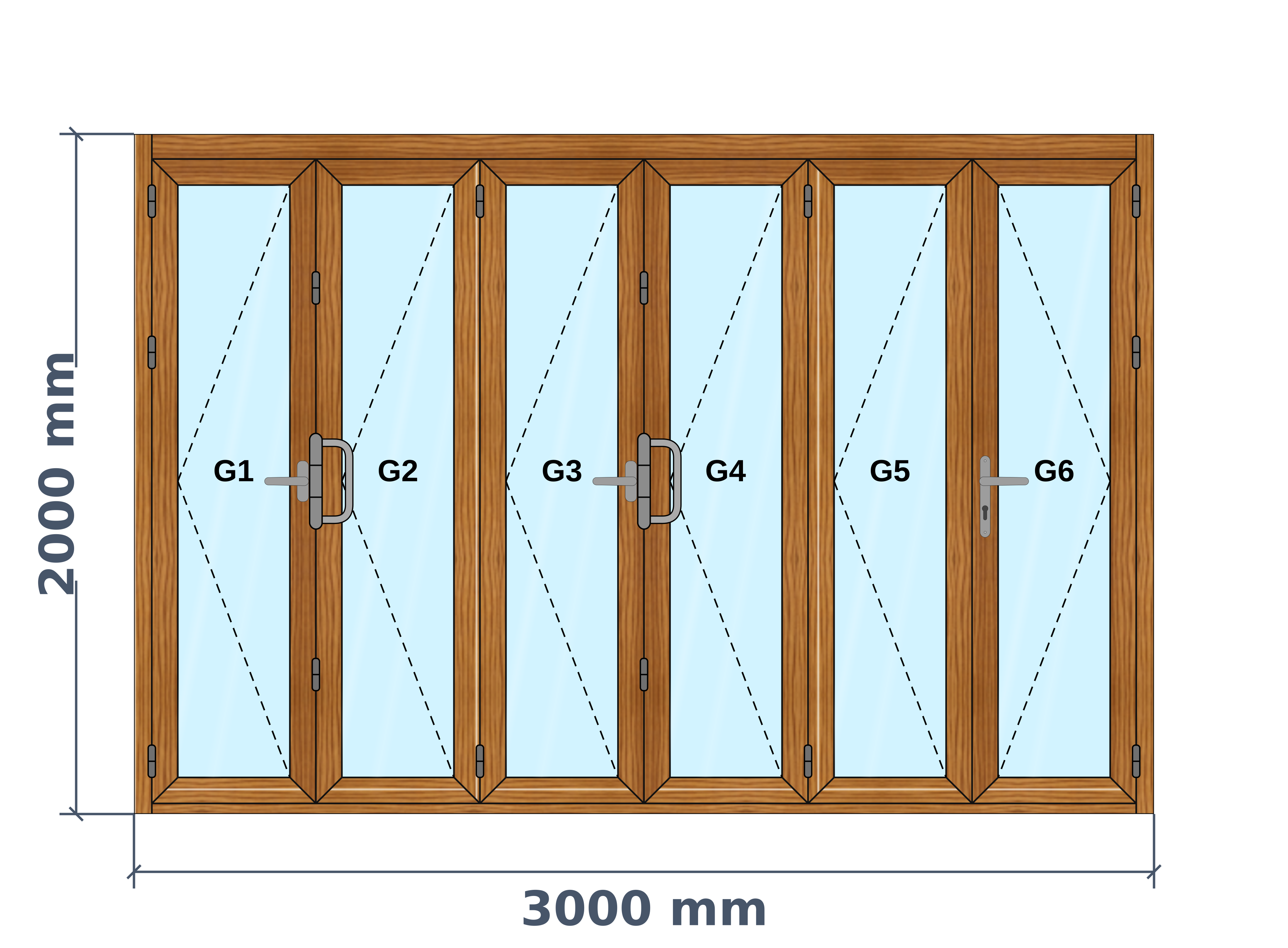
Doing this by hand means counting hardware leaf by leaf and hoping nothing is missed, and missed hardware on a door like this is expensive. In AluSync you set the leaves and the drawing shows them as they will be made.
The hardware follows the position of each leaf. An end leaf and a meeting leaf do not take the same parts, and your product rules decide what each one gets.
What you can design
- Even and odd numbers of leaves
- Leaves folding to one side or both sides
- Door locks, shoot bolts and end pivots
- Georgian bars on the glass
How AluSync handles it
Drawn leaf by leaf
Each leaf is labelled, with its hinges and handle in the right place.
Hardware by position
Locks, shoot bolts and pivots follow where each leaf sits, not one rule for every leaf.
Glass per leaf
Each leaf has its own glass label, carried onto the quotation and reports.
Questions about sliding-folding doors
Is a bi-fold door the same as a sliding-folding door?
Yes, the terms are used for the same kind of door: leaves hinged together that slide on a track and fold to the side.
Can AluSync work out the hardware for each leaf?
Yes. Hardware is worked out from your product rules according to the position of each leaf.
Ready to Experience These Features?
Book a free 30-minute demo and watch your own windows go from measurement to quote to cutting list. No payment details required.
One system from first measurement to final invoice